
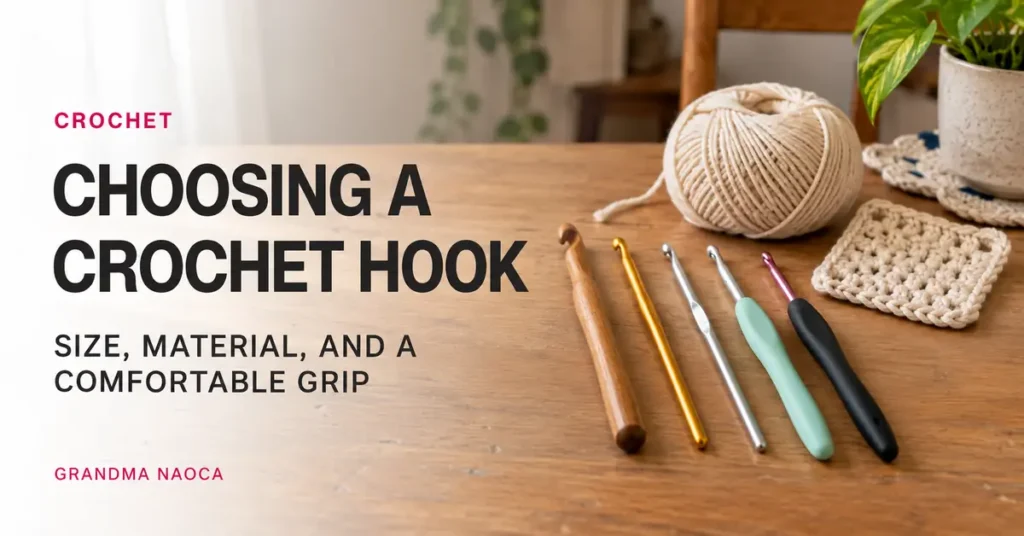
A crochet hook does more than pull yarn through a loop. Its size helps determine the fabric, and its shape affects how comfortably you can work. Start with the yarn and the project, then compare the way a few stitches feel.
Size changes the fabric
With the same yarn and stitch, a smaller hook generally makes a firmer fabric; a larger hook generally makes a looser one. Your tension also matters. Two people using identical tools may still need different hooks to match a pattern’s gauge.
For a bag, a firmer fabric may be useful. For a scarf, you may want more drape. Do not choose a hook only because it makes the work feel fast: first decide what the finished piece needs to do.
| Material | What to notice |
|---|---|
| Aluminum | A smooth surface often lets yarn slide easily. |
| Wood or bamboo | Some yarns feel less slippery on these surfaces. |
| Plastic | Often light, especially in larger sizes; finishes vary. |
| Steel | Often used for fine thread crochet; steel numbering differs from regular hooks. |
Compare the handle and hook head
Hold the hook for a short practice session rather than judging the handle by its appearance. Notice whether you grip tightly, whether the yarn catches, and whether the hook head passes through the stitches easily. An ergonomic handle may suit you, but comfort is individual.
Both inline and tapered hook shapes have devoted fans. There is no single shape every beginner must use. A smooth head and consistent loops are more helpful than buying the most expensive option.
Check millimeters instead of relying on letters
A hook marked G may not match another brand’s G exactly. Find the millimeter size printed on the shaft or handle and record it with your project. If the marking has worn off, compare the shaft with a suitable crochet hook gauge; a tapered throat is not the same as the working shaft.
Test before committing to a large project
Work a swatch in the actual stitch pattern. For a fitted item, compare the gauge over the area specified by the pattern, after the recommended washing or blocking. If you have too many stitches across that distance, a larger hook may help; too few may call for a smaller one.
If changing sizes produces unpleasantly stiff or open fabric, consider a more suitable yarn instead. Take breaks and let your hands relax. Comfort matters throughout the project, not just for its first few minutes.
Your practical checklist
- Match the hook to the yarn and intended fabric.
- Record the millimeter size and brand.
- Try the handle and head with a short sample.
- Measure gauge when the finished size matters.
- Keep the yarn band and swatch notes together.
Frequently asked questions
Should I always use the size on the yarn label?
It is a useful starting point, not a guarantee. A pattern’s gauge and the fabric you need are the deciding checks.
Will an ergonomic hook fix sore hands?
It may feel more comfortable, but it is not a medical treatment. Avoid forcing your grip and take regular breaks.
Why do two hooks with the same letter look different?
U.S. naming and hook design vary. Compare the actual millimeter measurements.
Keep learning
- Crochet Hook Sizes Explained: Read the Millimeters First
- How to Make and Measure a Crochet Gauge Swatch
- How to Keep Your Crochet Tension More Even
Helpful references: Craft Yarn Council hook and needle sizing. These resources support terminology and general guidance; your pattern instructions and yarn care label take priority.