
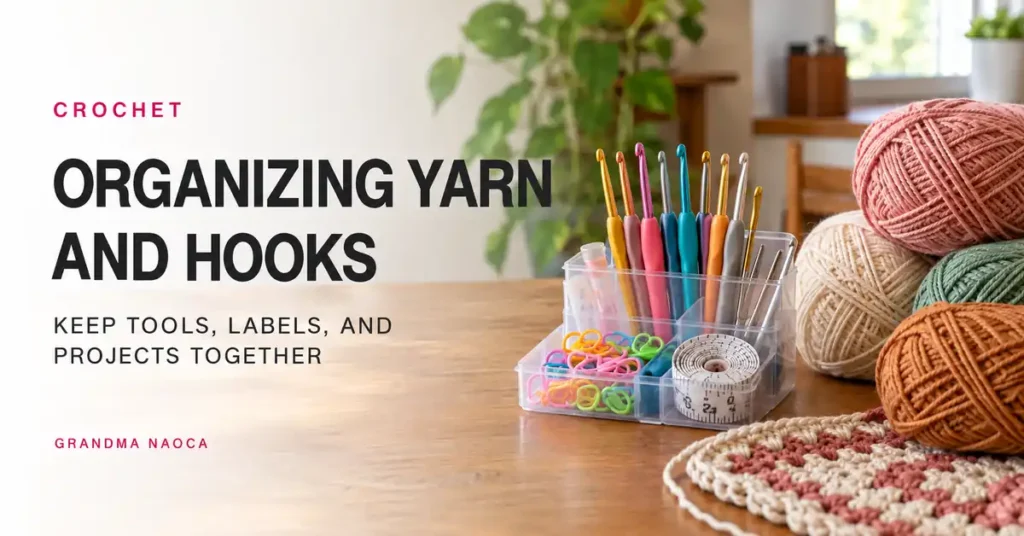
A useful crochet setup does not need to look like a craft store. It needs to make your next project easy to find and your current project easy to resume. Start with a few clear categories and keep the important labels with the yarn.
Sort yarn by useful details
Fiber and yarn weight are useful first groups because they help you plan substitutions and care. Within those groups, you can sort by color or project. Avoid a system with so many categories that every ball becomes a difficult decision.
Keep the band or a photo showing the brand, yarn name, fiber, weight category, yardage, color, dye lot, and care instructions. Attach a note to leftover yarn if the original band has been lost.
Make hook sizes easy to read
Store hooks by their millimeter size rather than by letter alone. A case, small divided box, or labeled pouch can work. Keep fine steel hooks separately if their number system confuses the regular-hook collection.
Record the brand when it matters to your tension. If a size marking is wearing off, photograph it while it is still readable or label the storage slot. Keep scissors and yarn needles in their own secure spaces.
Give each unfinished project a small home
Place the working yarn, pattern, hook, and notes together in a bag or container. Record the last completed row or round, stitch count, and any changes. Marking the last completed row is clearer than writing only the next number you think you need.
Leave markers in the fabric and secure the active loop so it does not unravel during storage. Label the bag with the project name. These habits are especially helpful if you alternate between several pieces.
Use a light inventory before shopping
A quick list of yarn quantities and planned projects can prevent buying duplicates you already own. Include yardage or approximate remaining amounts when known. Do not promise yourself that every scrap must become a new project immediately.
A phone note or paper page is enough. Update it when you finish a project or buy yarn rather than creating a complicated system you will not maintain.
Review the setup occasionally
Remove loose bits, check labels, and put borrowed tools back in their places. Store clean, dry yarn in a suitable area away from moisture. Choose containers that protect it without hiding every label.
Keep the system easy to reset in a few minutes. The goal is more comfortable making, not a perfectly photographed shelf.
Your practical checklist
- Group yarn by fiber and weight.
- Save labels or photos with each lot.
- Sort hooks by millimeter measurement.
- Keep active projects with progress notes.
- Check your inventory before buying duplicates.
Frequently asked questions
Do I need special storage furniture?
No. A few labeled bags, boxes, or an existing drawer can be enough.
What details should I save for leftovers?
At least the yarn name, fiber, weight, color, dye lot if available, and care instructions. Yardage is useful when known.
How do I avoid losing my place in a project?
Record the last completed row or round and its stitch count, then keep those notes with the pattern and hook.
Keep learning
- How to Choose Yarn for Crochet: Fiber, Weight, and Feel
- How to Count Crochet Stitches, Rows, and Rounds
- How to Wash and Store Crochet So It Keeps Its Shape
Helpful references: Craft Yarn Council yarn categories, Craft Yarn Council hook sizes. These resources support terminology and general guidance; your pattern instructions and yarn care label take priority.