
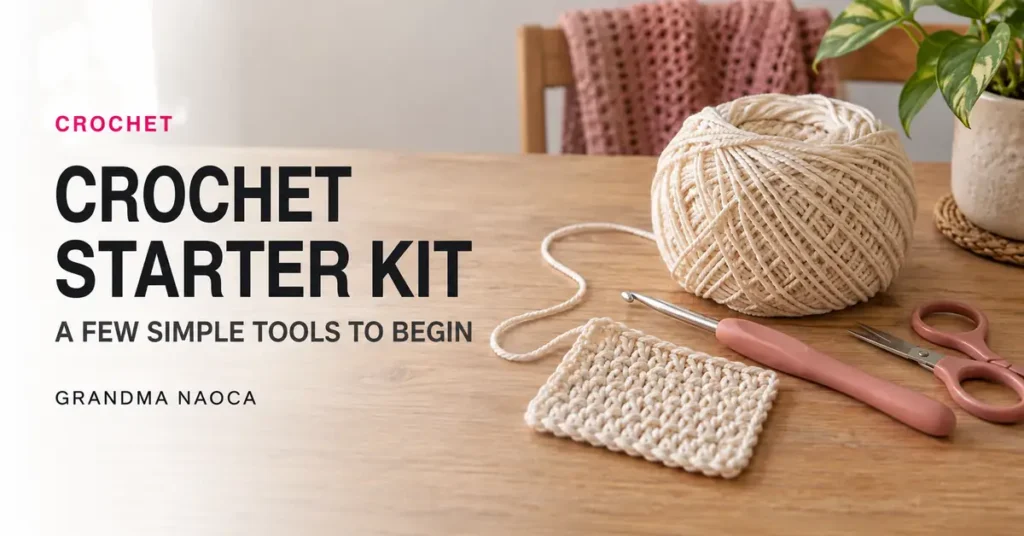
A wall of colorful yarn can make starting crochet feel more complicated than it is. You can begin with one suitable ball, one hook, and a few inexpensive tools. Keep the first shopping trip small so you can discover what feels comfortable before buying a whole collection.
Start with yarn you can see clearly
Smooth, light-colored yarn makes the little V shapes at the top of each stitch easier to spot. Dark, fuzzy, or heavily textured yarn can hide those clues. Save those yarns for a project after you feel comfortable counting stitches.
A medium, or category 4, yarn is one approachable option. The recommended crochet hook is often around 5.5–6.5 mm, but read the label: thickness and construction vary even within one category. Acrylic, cotton, and blends feel different in your hands; choose a simple yarn with clear care instructions.
Buy one hook that matches the yarn
The millimeter measurement is more dependable than a letter alone. U.S. letter names can differ between manufacturers, so check both the yarn band and the hook. A comfortable handle is useful, but a large ergonomic set is not a requirement.
Try holding the hook like a pencil and then like a knife. Neither grip is a test you have to pass. Look for an easy hold that lets the hook move without squeezing hard.
A small starter shopping list
- One ball of smooth, light-colored yarn, with its label.
- One crochet hook in the recommended millimeter size.
- Small scissors reserved for yarn.
- A blunt yarn needle with an eye large enough for your yarn.
- Two to six locking stitch markers.
- A ruler or tape measure and a small notebook you already own.
Make your first practice piece
For a single crochet practice strip, chain 21. Work a single crochet into the second chain from the hook, then into each remaining chain: 20 stitches. Chain 1 and turn; for this exercise, that turning chain does not count as a stitch. Work into each of the 20 stitches, marking the first and last.
Keep going for a few rows and count after every row. This is a learning swatch, not a fitted pattern. Its exact finished size is unimportant. Once the edges feel more predictable, try half double crochet and double crochet in separate labeled samples.
Let your next project guide the next purchase
Keep the yarn band so you can find the fiber, care instructions, color, and dye lot later. A project bag can be a bag you already have. Blocking tools, multiple hook sizes, and a bigger yarn stash can wait until a specific project calls for them.
Your practical checklist
- Read the yarn label before selecting the hook.
- Put scissors, a yarn needle, and markers together.
- Practice 20 single crochet stitches per row.
- Mark both edges and count each row.
- Save the yarn band and note the hook size.
Frequently asked questions
Do I need a complete hook set?
No. One suitable hook is enough for a first practice piece. Add other sizes when a pattern or gauge swatch calls for them.
Can I start with black yarn?
You can, but it is harder to see stitches. A lighter smooth yarn usually makes learning less frustrating.
Is cotton or acrylic better?
Either can work. Cotton often gives crisp stitches, while many acrylic yarns feel softer and springier. Choose a yarn you can see and handle comfortably.
Keep learning
- How to Choose a Crochet Hook That Fits Your Project
- How to Choose Yarn for Crochet: Fiber, Weight, and Feel
- 7 Crochet Basics to Practice Before Your First Project
Helpful references: Craft Yarn Council yarn weights, Craft Yarn Council hook sizing. These resources support terminology and general guidance; your pattern instructions and yarn care label take priority.