

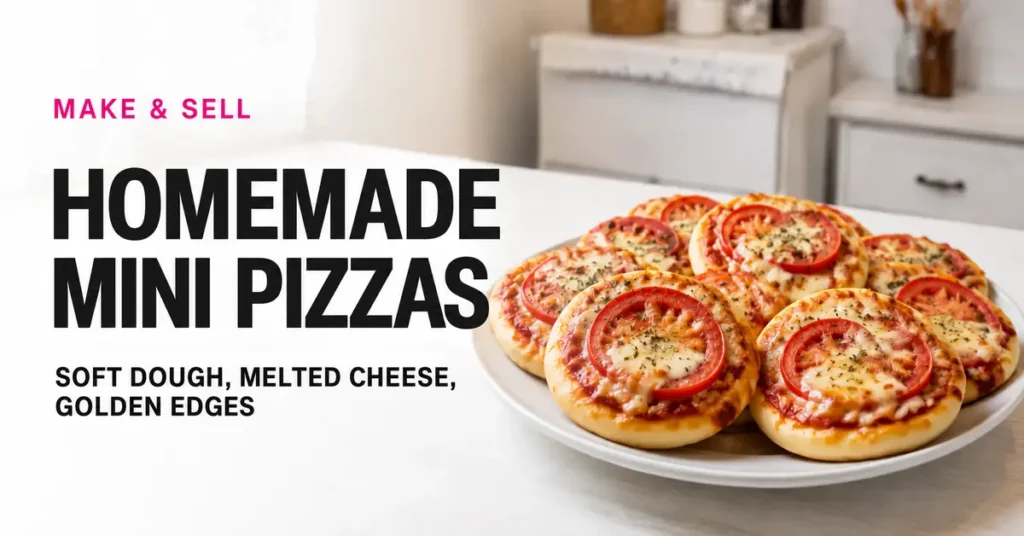
These small pizzas start with an evenly portioned yeast dough and a brief first bake. The original recipe keeps the sauce thick and leaves a clean edge. That helps the base support the toppings instead of turning damp in the middle.
- Prep
- 30 minutes
- Cook or chill
- 45–60 minutes rising, 5–7 minutes pre-baking, then 8–12 minutes final baking
- Yield
- 24 mini pizzas, about 3½–4 inches across
Ingredients
The original recipe uses a 240 ml cup and 15 ml tablespoon. U.S. volumes, pan sizes, and oven settings are rounded; listed grams and milliliters are the best guide for repeating a batch. Use Brazilian table cream and 50% cocoa chocolate powder where specified, rather than assuming U.S. heavy cream or unsweetened cocoa is identical.
Dough
- 500 g all-purpose flour
- 300 ml lukewarm water
- 10 g dry yeast
- 20 g sugar
- 10 g salt
- 40 ml neutral oil
Topping
- 300 g thick tomato sauce
- 500 g shredded mozzarella
- 2 tomatoes, seeded and diced
- Dried oregano, to taste
How to make it
- Mix water, yeast, sugar, and oil using the yeast package’s temperature guidance. Add flour and salt and knead until smooth and soft.
- Cover and let rise until visibly expanded, about 45–60 minutes. Preheat to 425°F (220°C).
- Divide into 24 even balls and rest covered for 10 minutes. Roll into 9–10 cm discs and make a few small holes in the centers.
- Arrange on trays and pre-bake for 5–7 minutes, just until the surface loses its raw look without browning deeply.
- For immediate baking, divide thick sauce, cold cheese, diced tomato, and oregano among the bases, keeping the rims clear.
- Bake for another 8–12 minutes, until the bases are cooked through and the cheese is melted. Serve promptly.
- For freezer preparation, cool the pre-baked bases, add cold toppings, and freeze separately on a tray before packing. Keep at 0°F or below; test cooking instructions from frozen, which need more time than the fresh batch.
Small details that help
Avoid adding extra flour just to make the dough easier to handle. Drain the diced tomato and use a small measured amount of sauce. Keep cheese refrigerated until needed. Reheat refrigerated pizzas to 165°F.
Portioning and packaging
Decide whether the product is served hot or sold frozen and develop that process separately. Count misshapen discs, packaging, freezer use, oven time, and delivery costs. Frozen products need clear storage and cooking instructions appropriate to the actual package.
Thinking of selling this in the U.S.?
Check this exact product with your state and local food regulator before taking orders. Home-food permissions depend on the location, recipe, kitchen, and sales channel. Refrigerated dairy, custard, chicken, and meat products must not be assumed eligible for cottage-food sales. Ask about permits, approved facilities, handling, labeling, and delivery restrictions. The FDA food-business overview is a starting point, not approval to sell this recipe.
Calculate costs from your own batch
- Record ingredient quantities and current local costs in U.S. dollars.
- Add packaging, labels, utilities, refrigeration or freezing, waste, and labor.
- Divide the batch cost by the actual number of acceptable finished units.
- Include applicable taxes, overhead, delivery, and payment fees when setting a price.
No selling price, profit margin, sales volume, or income is guaranteed. A trial batch helps you assess consistency; it does not validate commercial food safety.
Labels and allergens
Check ingredient and packaging labels for milk, eggs, wheat, soy, nuts, and other allergens that apply to this batch. Keep supplier information and ingredient subcomponents, and prevent cross-contact. A short list of likely allergens is not a complete sales label. Ask the regulator what ingredient order, net quantity, business identification, allergen statements, and any cottage-food notice are required. See the FDA food-allergen guidance.
Storage and delivery
Frequently asked questions
Why is the crust dry?
Too much flour or an overly long first bake can dry it out. Pre-bake only until the raw surface sets.
Can I freeze topped pizzas?
Yes for a trial household batch. Keep them frozen and test the final baking method; verify local requirements before selling.
Can I use fresh watery sauce?
Reduce or drain it first. Excess liquid makes the small bases soggy.