

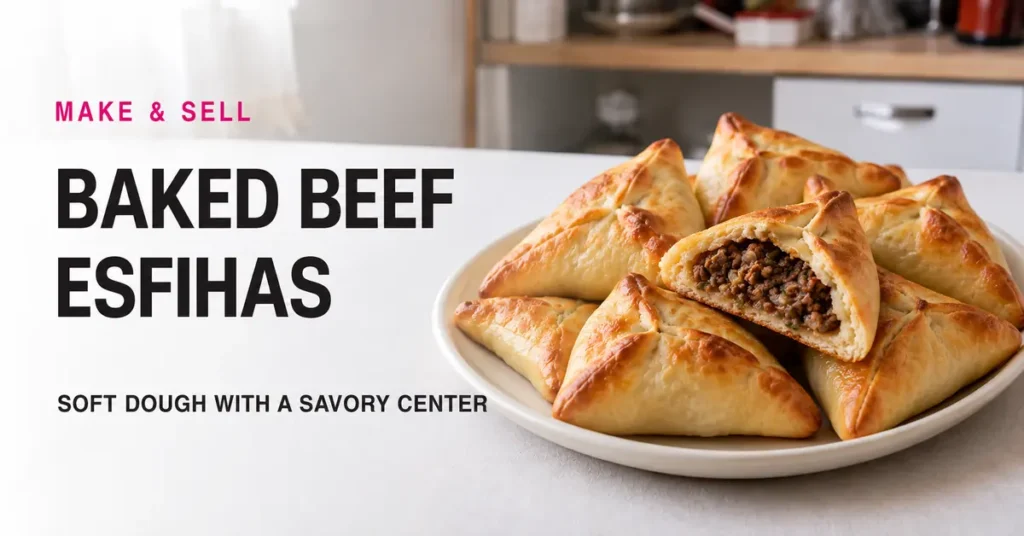
These closed triangular pastries bring soft yeast dough together with a savory beef center. Esfihas are a Brazilian favorite with Middle Eastern roots. The original recipe rests the dough and drains the filling so liquid does not soak through the base.
- Prep
- 40 minutes
- Cook or chill
- 45–70 minutes rising, then 20–25 minutes baking
- Yield
- about 20 closed pastries
Ingredients
The original recipe uses a 240 ml cup and 15 ml tablespoon. U.S. volumes, pan sizes, and oven settings are rounded; listed grams and milliliters are the best guide for repeating a batch. Use Brazilian table cream and 50% cocoa chocolate powder where specified, rather than assuming U.S. heavy cream or unsweetened cocoa is identical.
Dough
- About 500 g all-purpose flour, adjusted only as needed
- 300 ml lukewarm milk
- 10 g dry yeast
- 40 g granulated sugar
- 10 g salt
- 80 ml neutral oil
- 1 egg
Beef filling
- 500 g raw ground beef
- 1 small onion, finely chopped
- 2 tomatoes, seeded and finely chopped
- Juice of ½ lemon
- 2 tablespoons chopped parsley/scallions or mint
- Salt, black pepper, and Syrian-style spice blend to taste
Egg wash
- 1 egg yolk mixed with 1 teaspoon water
How to make it
- Mix lukewarm milk, yeast, sugar, oil, and egg, following the yeast package’s temperature guidance. Add flour and salt to make a soft dough.
- Knead for 8–10 minutes. Cover and let rise until visibly expanded, about 45–70 minutes depending on the room.
- Mix raw beef with onion, tomato, lemon, and seasonings. Drain in a sieve over a covered container in the refrigerator, keeping raw meat and its juices separate from ready-to-eat food. Lemon juice does not cook or sanitize the beef.
- Divide the dough into about 20 equal portions and rest covered for 10 minutes. Roll circles with a slightly thicker center.
- Place a measured portion of cold filling in the center. Bring three edges together to make a closed triangle and pinch the seams firmly. Place seam-side up on lined trays.
- Brush with egg wash and rest for 15 minutes. Bake in a preheated 400°F (200°C) oven for 20–25 minutes, adjusting as needed until the dough is golden and the beef center reaches at least 160°F.
- Serve promptly. Refrigerate leftovers safely and reheat to 165°F.
Small details that help
Use expansion rather than the clock alone to judge the rise. Too much extra flour makes stiff dough; keep portions covered so they do not dry out. This is the closed version, so ensure the pastry encloses the meat rather than leaving a raw filling exposed for a shorter bake.
Portioning and packaging
Weigh dough and filling consistently and record actual counts. Each meat or cheese flavor needs a separate cost and storage plan. Develop separate instructions for any frozen version rather than assuming the fresh baking time works.
Thinking of selling this in the U.S.?
Check this exact product with your state and local food regulator before taking orders. Home-food permissions depend on the location, recipe, kitchen, and sales channel. Refrigerated dairy, custard, chicken, and meat products must not be assumed eligible for cottage-food sales. Ask about permits, approved facilities, handling, labeling, and delivery restrictions. The FDA food-business overview is a starting point, not approval to sell this recipe.
Calculate costs from your own batch
- Record ingredient quantities and current local costs in U.S. dollars.
- Add packaging, labels, utilities, refrigeration or freezing, waste, and labor.
- Divide the batch cost by the actual number of acceptable finished units.
- Include applicable taxes, overhead, delivery, and payment fees when setting a price.
No selling price, profit margin, sales volume, or income is guaranteed. A trial batch helps you assess consistency; it does not validate commercial food safety.
Labels and allergens
Check ingredient and packaging labels for milk, eggs, wheat, soy, nuts, and other allergens that apply to this batch. Keep supplier information and ingredient subcomponents, and prevent cross-contact. A short list of likely allergens is not a complete sales label. Ask the regulator what ingredient order, net quantity, business identification, allergen statements, and any cottage-food notice are required. See the FDA food-allergen guidance.
Storage and delivery
Frequently asked questions
Does lemon make raw beef safe?
No. Keep it refrigerated, prevent cross-contamination, and cook the center to a safe temperature.
Why do the seams open?
Wet filling, dry dough edges, or weak pinching can release the seal. Drain, keep dough covered, and close firmly.
Why is the dough shrinking as I roll it?
It needs a little more covered rest to relax. Avoid forcing it with more flour.