

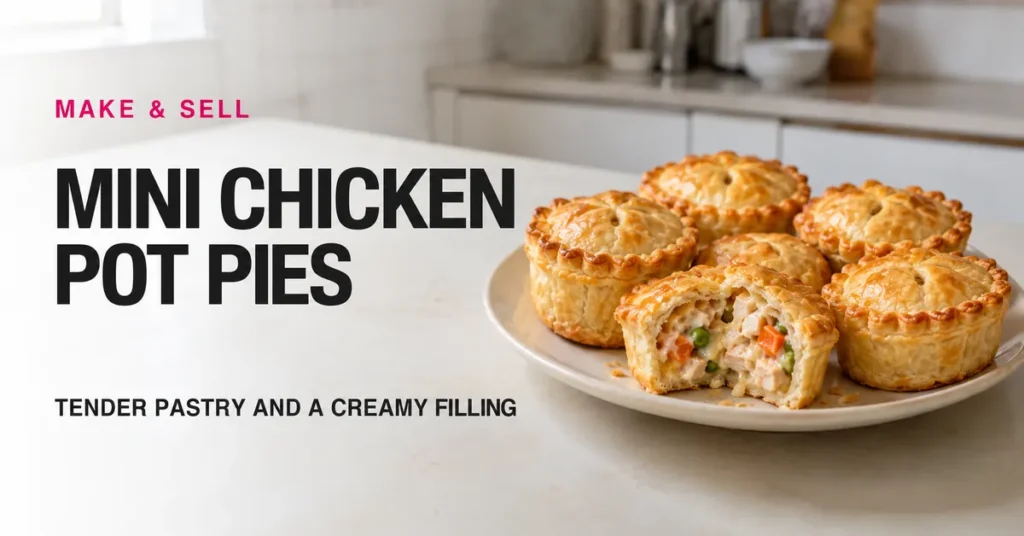
Brazilian empadinhas tuck a creamy chicken filling into tender little pastry shells. The original recipe treats the dough gently: bring it together rather than kneading it smooth. Cold filling and an even pastry thickness help the pies bake neatly.
- Prep
- 40 minutes
- Cook or chill
- 25–35 minutes baking, plus 20 minutes chilling and filling cooling
- Yield
- about 20 pies in 2½-inch molds
Ingredients
The original recipe uses a 240 ml cup and 15 ml tablespoon. U.S. volumes, pan sizes, and oven settings are rounded; listed grams and milliliters are the best guide for repeating a batch. Use Brazilian table cream and 50% cocoa chocolate powder where specified, rather than assuming U.S. heavy cream or unsweetened cocoa is identical.
Pastry
- 500 g all-purpose flour
- 250 g cold butter, cubed
- 2 egg yolks
- 1 teaspoon salt
- 2–4 tablespoons ice water, only as needed
Filling
- 500 g cooked shredded chicken
- 1 onion, chopped
- 2 garlic cloves, minced
- 1 tomato, seeded and chopped
- ½ cup thick tomato sauce (120 ml)
- 150 g firm Brazilian requeijão
- Chopped parsley and scallions, salt, and pepper to taste
- Olive oil for sautéing
Egg wash
- 1 egg yolk mixed with 1 teaspoon water
How to make it
- Sauté onion and garlic in a little olive oil. Add the cooked chicken, tomato, sauce, and seasoning; simmer until there is no loose liquid. Cool promptly in a shallow container in the refrigerator, then mix in the requeijão.
- Combine flour and salt. Rub in the cold butter with your fingertips until the mixture resembles damp crumbs.
- Add the 2 yolks and only enough ice water for the dough to hold together. Do not knead. Cover and refrigerate for 20 minutes.
- Preheat to 375°F (190°C). Portion dough into clean 6–7 cm molds, lining the base and sides evenly.
- Add a measured amount of cold filling, keeping the rim clean. Roll smaller dough portions for lids, seal the edges, and trim excess.
- Brush with egg wash and bake for 25–35 minutes, until golden and the center of the chicken filling reaches 165°F.
- Rest briefly before unmolding. Serve promptly, or cool in shallow containers and refrigerate within the safe time limit.
Small details that help
Cold butter helps limit gluten development. Working the dough until very smooth can make it tough and cause shrinkage. Firm cooking requeijão is found in Brazilian markets; cream cheese is a possible trial alternative, but changes tang, salt, and texture.
Portioning and packaging
Use the same base and lid weights for even baking. Count broken crusts and leaked fillings as losses. Refrigerated or frozen chicken pies may need a different permitted kitchen and sales process from cottage-food baked goods.
Thinking of selling this in the U.S.?
Check this exact product with your state and local food regulator before taking orders. Home-food permissions depend on the location, recipe, kitchen, and sales channel. Refrigerated dairy, custard, chicken, and meat products must not be assumed eligible for cottage-food sales. Ask about permits, approved facilities, handling, labeling, and delivery restrictions. The FDA food-business overview is a starting point, not approval to sell this recipe.
Calculate costs from your own batch
- Record ingredient quantities and current local costs in U.S. dollars.
- Add packaging, labels, utilities, refrigeration or freezing, waste, and labor.
- Divide the batch cost by the actual number of acceptable finished units.
- Include applicable taxes, overhead, delivery, and payment fees when setting a price.
No selling price, profit margin, sales volume, or income is guaranteed. A trial batch helps you assess consistency; it does not validate commercial food safety.
Labels and allergens
Check ingredient and packaging labels for milk, eggs, wheat, soy, nuts, and other allergens that apply to this batch. Keep supplier information and ingredient subcomponents, and prevent cross-contact. A short list of likely allergens is not a complete sales label. Ask the regulator what ingredient order, net quantity, business identification, allergen statements, and any cottage-food notice are required. See the FDA food-allergen guidance.
Storage and delivery
Frequently asked questions
Why are the pies leaking?
The filling may be warm or too wet, or the rims may not be sealed. Reduce excess liquid before cooling it.
Can I freeze them?
Test baked and unbaked pies separately. Freeze on a tray before packing, label clearly, and develop a cooking method that reaches 165°F in the center.
Can I sell them as shelf-stable baked goods?
Do not assume so. Chicken and creamy filling require temperature control and a check of local permissions.