
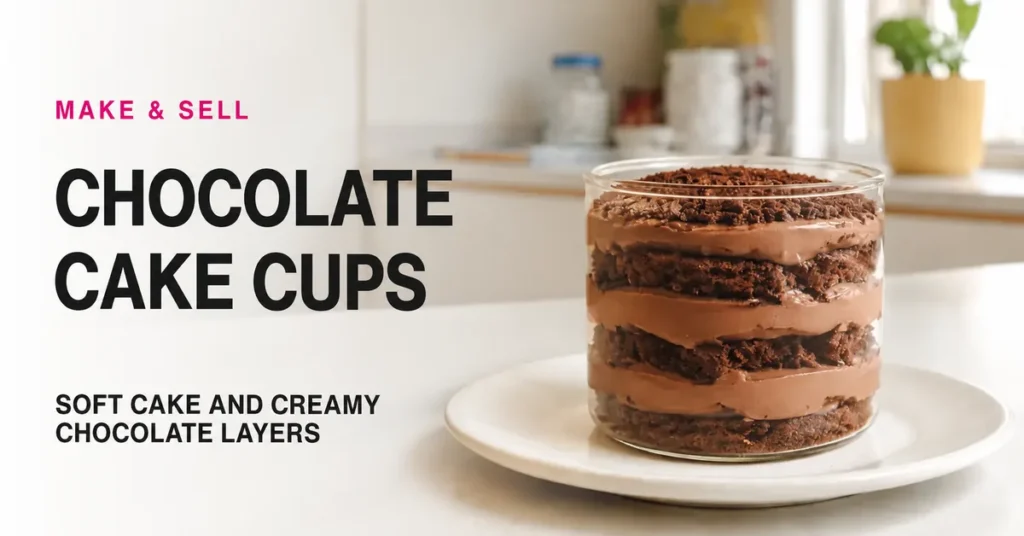
A spoonful of soft chocolate cake and creamy brigadeiro is a lovely little dessert. This Brazilian cake-in-a-cup recipe builds on the layered sweets shared on the original Vó Naoca site. A scale keeps each cup consistent, and cooling each component properly keeps the layers neat.
- Prep
- 50 minutes
- Cook or chill
- 30–35 minutes baking, plus cooling
- Yield
- about 10 cups, approximately 7.4 fl oz each
Ingredients
The original recipe uses a 240 ml cup and 15 ml tablespoon. U.S. volumes, pan sizes, and oven settings are rounded; listed grams and milliliters are the best guide for repeating a batch. Use Brazilian table cream and 50% cocoa chocolate powder where specified, rather than assuming U.S. heavy cream or unsweetened cocoa is identical.
Cake
- 3 eggs
- 180 g granulated sugar
- ½ cup neutral oil (120 ml)
- ¾ cup milk (180 ml)
- 180 g all-purpose flour
- 50 g Brazilian 50% cocoa chocolate powder
- 10 g baking powder
- Pinch of salt
Creamy brigadeiro filling
- 790 g sweetened condensed milk (about two 14 oz cans)
- 400 g Brazilian table cream
- 100 g semisweet chocolate, chopped
- 30 g Brazilian 50% cocoa chocolate powder
Milk soak and topping
- 200 ml milk
- 1 tablespoon chocolate powder
- Chocolate sprinkles or shavings, to taste
How to make it
- Preheat to 350°F (180°C). Grease and line a 20 × 30 cm (about 8 × 12-inch) baking pan. Measure ingredients with a scale.
- Whisk the eggs, sugar, oil, and milk. Fold in sifted flour, chocolate powder, and salt, then add the baking powder.
- Bake for 30–35 minutes, until the center is set and a toothpick has no liquid batter. Cool on a rack, then break the cake into even pieces.
- Cook the filling ingredients over low heat in a heavy pan, stirring the base and sides, until thick but still spoonable. Transfer to shallow containers and refrigerate promptly; do not leave a large hot batch on the counter until completely cold.
- Mix the milk and chocolate powder for the soak and keep it refrigerated.
- With every component cold, layer cake, a measured amount of soak, and filling in clean food-safe cups. Start with 55 g cake, 25 ml soak, and 80–90 g filling per 220 ml cup, adjusting to fit without pressing the cake tightly.
- Leave room below the lid, wipe the rim, close, and refrigerate immediately. Keep the cups cold during transport.
Small details that help
Pipe the filling to avoid streaks on the cup. Too much soak makes the cake heavy, and warm components cause condensation. Brazilian 50% cocoa powder is a sweetened cocoa blend, not unsweetened U.S. cocoa; changing it changes the formula. Table cream is sold at many Brazilian or Latin markets.
Portioning and packaging
Record the weight of cake, soak, and filling in a trial cup before preparing the batch. Use food-contact-safe cups with secure lids and labels that stay attached when chilled. Count only complete, presentable cups when calculating yield.
Thinking of selling this in the U.S.?
Check this exact product with your state and local food regulator before taking orders. Home-food permissions depend on the location, recipe, kitchen, and sales channel. Refrigerated dairy, custard, chicken, and meat products must not be assumed eligible for cottage-food sales. Ask about permits, approved facilities, handling, labeling, and delivery restrictions. The FDA food-business overview is a starting point, not approval to sell this recipe.
Calculate costs from your own batch
- Record ingredient quantities and current local costs in U.S. dollars.
- Add packaging, labels, utilities, refrigeration or freezing, waste, and labor.
- Divide the batch cost by the actual number of acceptable finished units.
- Include applicable taxes, overhead, delivery, and payment fees when setting a price.
No selling price, profit margin, sales volume, or income is guaranteed. A trial batch helps you assess consistency; it does not validate commercial food safety.
Labels and allergens
Check ingredient and packaging labels for milk, eggs, wheat, soy, nuts, and other allergens that apply to this batch. Keep supplier information and ingredient subcomponents, and prevent cross-contact. A short list of likely allergens is not a complete sales label. Ask the regulator what ingredient order, net quantity, business identification, allergen statements, and any cottage-food notice are required. See the FDA food-allergen guidance.
Storage and delivery
Frequently asked questions
Can I use any cup?
Choose a food-safe container suitable for cold desserts. A nominal cup volume does not determine the amount of filling it can hold.
Can these sit out for a bake sale?
Treat these milk-and-cream cups as perishable. Keep them refrigerated; do not assume they qualify for home-kitchen sales.
Can I substitute heavy cream?
Brazilian table cream has a different composition. Heavy cream can change consistency, cooking time, and yield; test a small batch before using a different product.