
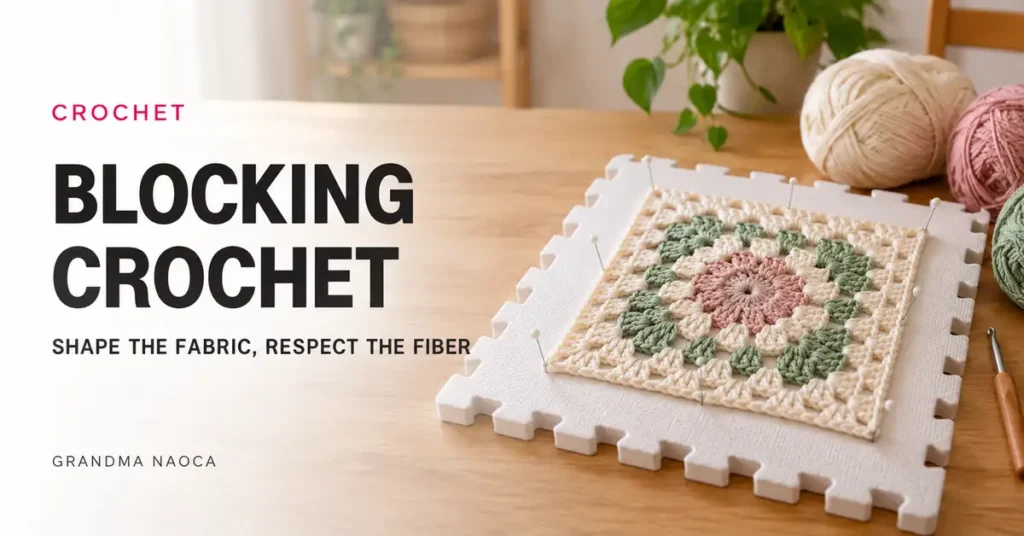
Blocking can help crochet settle into its intended shape and show the stitch pattern more clearly. It is a finishing method, not a repair for missing stitches. Start with the yarn label and a sample before choosing water, spray, or steam.
Choose a method for the actual yarn
Wet blocking, spray blocking, and steam blocking are different processes. A fiber name alone does not make every method safe. Read the yarn label, the pattern’s finishing instructions, and any tool directions. Test the method on a swatch first.
For blends, consider the care requirements of the full yarn rather than treating it like its most prominent fiber. Do not use a hot iron directly on crochet as a shortcut. Steam can also damage fibers or flatten texture if applied incorrectly.
| Method | What to check |
|---|---|
| Wet blocking | Whether soaking or washing is permitted and how wet fabric should be handled. |
| Spray blocking | Whether light moisture is appropriate and sufficient for the intended shaping. |
| Steam blocking | Fiber heat limits, steamer directions, and a heat-safe work surface. |
Prepare a suitable surface
Use a clean surface that suits the chosen method. For pinning, use rust-resistant pins and a surface designed to accept them. Not every foam mat tolerates steam or heat. Protect the work area according to the equipment’s directions.
Check the intended dimensions before you begin. Mark reference points if useful, but do not force the fabric far beyond its natural shape just to reach a number. A serious gauge or stitch-count mismatch needs another solution.
Handle wet fabric gently
When wet blocking is appropriate, follow the care instructions for water and washing product. Support the entire piece when lifting it. Heavy wet yarn can stretch under its own weight. Gently press out excess water or roll it in a clean towel; do not wring it.
Lay it flat, smooth the stitches, and shape the edges gradually. Pin only as needed. Let it dry fully before removing the pins or moving it into storage.
Be cautious with steam
Use steam only when the yarn and equipment instructions support it. Keep the heat source from contacting the yarn and follow the tool’s distance guidance. There is no one safe steam distance for every fiber and device.
Let the sample cool and dry before assessing it. Acrylic can change permanently with heat, so do not treat that effect as a reversible experiment on the finished piece. If you are unsure, choose a permitted nonheat method or leave the piece unblocked.
Check the result after it settles
Measure again once dry and compare it with your notes. Blocking may reveal lace or soften small irregularities, but extra stitches, missed stitches, and incorrect seams still need correction.
Your practical checklist
- Read the yarn care label and pattern finishing notes.
- Test the selected method on a swatch.
- Use a clean surface suited to moisture or heat.
- Shape without overstretching and support wet fabric.
- Let the piece dry and cool completely before handling.
Frequently asked questions
Does every piece need blocking?
No. It depends on the yarn, stitch pattern, and intended result.
Can I steam any acrylic project?
No. Heat can permanently alter acrylic. Follow product guidance and test a sample; do not assume steam is safe.
Will blocking repair a missed stitch?
No. It can refine fabric shape, but it does not replace missing stitches.
Keep learning
- How to Make and Measure a Crochet Gauge Swatch
- How to Finish Crochet Neatly: Ends, Seams, and Edges
- How to Wash and Store Crochet So It Keeps Its Shape
Helpful references: Woolmark care guidance, Craft Yarn Council gauge guidance. These resources support terminology and general guidance; your pattern instructions and yarn care label take priority.