
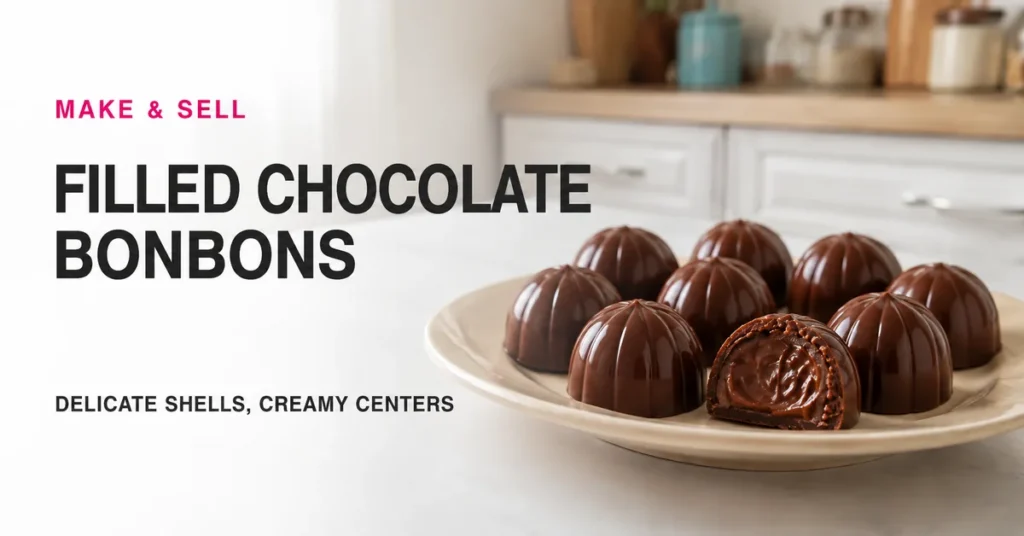
A thin chocolate shell and a cold brigadeiro center turn this Brazilian trufa into a filled bonbon. The original recipe emphasizes dry tools and patient chocolate work. A little space above the filling lets the final layer seal each piece cleanly.
- Prep
- 25 minutes
- Cook or chill
- filling cooking, cooling, and chocolate setting time vary
- Yield
- about 20 bonbons in 30–35 g molds
Ingredients
The original recipe uses a 240 ml cup and 15 ml tablespoon. U.S. volumes, pan sizes, and oven settings are rounded; listed grams and milliliters are the best guide for repeating a batch. Use Brazilian table cream and 50% cocoa chocolate powder where specified, rather than assuming U.S. heavy cream or unsweetened cocoa is identical.
Shells
- 500 g milk, semisweet, or blended chocolate suitable for molding
Filling
- 395 g sweetened condensed milk
- 100 g Brazilian table cream
- 80 g semisweet chocolate
- 10 g butter
How to make it
- Clean and completely dry the mold, tools, and work area. Avoid touching the clean mold cavities with your fingers.
- Cook the filling ingredients over low heat, stirring, until thick and creamy. Transfer to a shallow container and cool promptly in the refrigerator until cold.
- Melt the shell chocolate gently. For real chocolate containing cocoa butter, temper according to that product’s melting, cooling, and working temperatures.
- Fill the mold cavities, tap gently to release bubbles, invert to drain excess chocolate, and scrape the top clean. Let the shells set as the chocolate manufacturer directs.
- Pipe in cold filling, leaving about ⅛ inch (2–3 mm) of space at the top.
- Cover with properly prepared chocolate, scrape level, and allow to set without abrupt temperature changes.
- Unmold when the pieces release easily. Handle with clean tools, weigh, package, and refrigerate the perishable filled candies.
Small details that help
Different chocolates have different tempering curves, so one temperature range cannot cover every product. Keep water away from melted chocolate. A coating formulated to set without tempering can be an alternative for a trial batch, but its taste and texture will differ.
Portioning and packaging
Weigh shell and filling usage, including draining and scraping losses. A thicker shell uses more chocolate and changes the bite. Keep labels and batch records with the packaging. A chocolate shell does not make a milk-based filling automatically safe at room temperature.
Thinking of selling this in the U.S.?
Check this exact product with your state and local food regulator before taking orders. Home-food permissions depend on the location, recipe, kitchen, and sales channel. Refrigerated dairy, custard, chicken, and meat products must not be assumed eligible for cottage-food sales. Ask about permits, approved facilities, handling, labeling, and delivery restrictions. The FDA food-business overview is a starting point, not approval to sell this recipe.
Calculate costs from your own batch
- Record ingredient quantities and current local costs in U.S. dollars.
- Add packaging, labels, utilities, refrigeration or freezing, waste, and labor.
- Divide the batch cost by the actual number of acceptable finished units.
- Include applicable taxes, overhead, delivery, and payment fees when setting a price.
No selling price, profit margin, sales volume, or income is guaranteed. A trial batch helps you assess consistency; it does not validate commercial food safety.
Labels and allergens
Check ingredient and packaging labels for milk, eggs, wheat, soy, nuts, and other allergens that apply to this batch. Keep supplier information and ingredient subcomponents, and prevent cross-contact. A short list of likely allergens is not a complete sales label. Ask the regulator what ingredient order, net quantity, business identification, allergen statements, and any cottage-food notice are required. See the FDA food-allergen guidance.
Storage and delivery
Frequently asked questions
Why do the shells leak?
The filling may be too warm or too high, leaving too little room for a complete seal.
Why is the chocolate dull?
Tempering or setting conditions may be off. Follow the product’s instructions and keep tools dry.
Can I use a different mold?
Yes, but the yield and shell-to-filling ratio change. Weigh a pilot batch in the new cavities.