

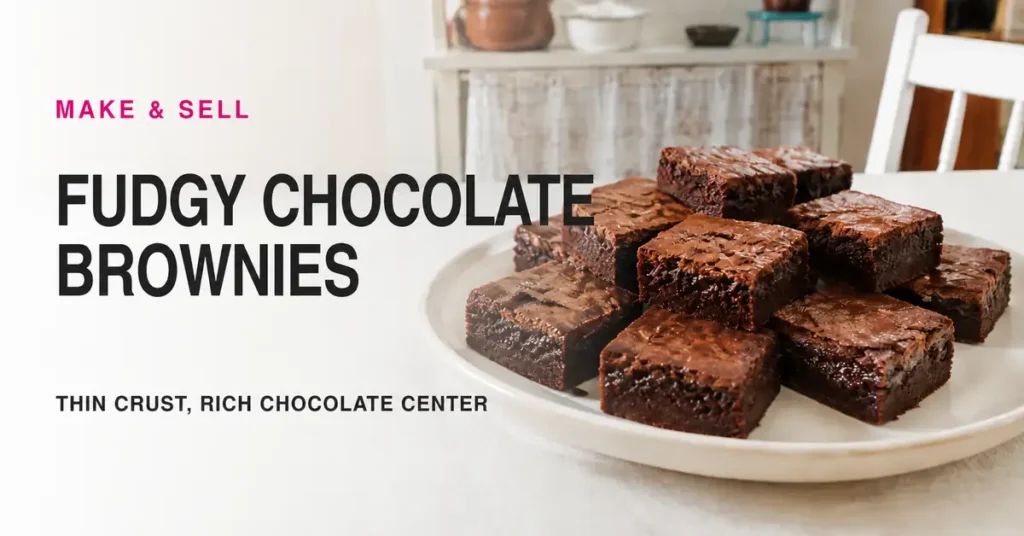
A thin top crust and a dense chocolate center make these brownies easy to enjoy in small squares. The original recipe gives cooling as much attention as baking. Waiting before cutting protects the crust and helps you portion the batch without crumbling the edges.
- Prep
- 15 minutes
- Cook or chill
- 20–28 minutes baking, plus cooling
- Yield
- 16 squares
Ingredients
The original recipe uses a 240 ml cup and 15 ml tablespoon. U.S. volumes, pan sizes, and oven settings are rounded; listed grams and milliliters are the best guide for repeating a batch. Use Brazilian table cream and 50% cocoa chocolate powder where specified, rather than assuming U.S. heavy cream or unsweetened cocoa is identical.
Brownies
- 200 g semisweet chocolate
- 120 g unsalted butter
- 3 eggs
- 180 g granulated sugar
- 80 g brown sugar
- 100 g all-purpose flour
- 30 g Brazilian 50% cocoa chocolate powder
- 1 teaspoon vanilla extract
- Pinch of salt
- 80 g walnuts or chocolate chips, optional
How to make it
- Preheat to 350°F (180°C). Line a 20 × 20 cm (about 8-inch square) metal pan with parchment, leaving handles at the sides.
- Melt the chocolate and butter gently in short microwave intervals or over gentle heat. Let the mixture cool until warm, not hot.
- Whisk the eggs and both sugars for about 1 minute to partly dissolve the sugar without whipping a cake-like foam.
- Mix in the melted chocolate and vanilla. Sift in flour, chocolate powder, and salt, then fold just until combined. Add optional nuts or chips.
- Spread evenly and bake for 20–28 minutes. Look for set edges and moist crumbs on a toothpick, with no liquid raw batter in the center.
- Cool completely in the pan. If needed, chill for 20 minutes to make cutting easier.
- Lift out and divide into a 4-by-4 grid. Wipe the knife between cuts and pack only when fully cool.
Small details that help
A completely dry toothpick often means the brownies have gone past their fudgy stage. Pan size and color change baking time. Keep the same pan and record both the baked weight and trimmed scraps. Do not taste raw batter, which contains raw flour and eggs.
Portioning and packaging
Use parchment or a food-safe liner to protect the crust inside the package. Include any trimming losses in the cost sheet. Unfilled brownies may be treated differently from cream-filled desserts under local rules; confirm this exact formula before selling.
Thinking of selling this in the U.S.?
Check this exact product with your state and local food regulator before taking orders. Home-food permissions depend on the location, recipe, kitchen, and sales channel. Refrigerated dairy, custard, chicken, and meat products must not be assumed eligible for cottage-food sales. Ask about permits, approved facilities, handling, labeling, and delivery restrictions. The FDA food-business overview is a starting point, not approval to sell this recipe.
Calculate costs from your own batch
- Record ingredient quantities and current local costs in U.S. dollars.
- Add packaging, labels, utilities, refrigeration or freezing, waste, and labor.
- Divide the batch cost by the actual number of acceptable finished units.
- Include applicable taxes, overhead, delivery, and payment fees when setting a price.
No selling price, profit margin, sales volume, or income is guaranteed. A trial batch helps you assess consistency; it does not validate commercial food safety.
Labels and allergens
Check ingredient and packaging labels for milk, eggs, wheat, soy, nuts, and other allergens that apply to this batch. Keep supplier information and ingredient subcomponents, and prevent cross-contact. A short list of likely allergens is not a complete sales label. Ask the regulator what ingredient order, net quantity, business identification, allergen statements, and any cottage-food notice are required. See the FDA food-allergen guidance.
Storage and delivery
Frequently asked questions
Does this recipe need baking powder?
No. Leaving it out keeps the dense texture.
Can I freeze squares?
Wrap cooled pieces tightly and freeze for up to 1 month for best quality. Thaw protected to reduce surface condensation.
How do I account for scraps?
Count them as a loss, or record them separately in another suitable product. They still use ingredients and labor.